← All posts
August 27, 2026
How Much Does Custom Software Development Actually Cost?
The honest, no-marketing-brochure answer — plus the three factors that actually move the number more than anything else.
Ask five development agencies what a custom application costs and you'll get five different answers, usually because none of them want to be the first to say a real number. So here's an attempt at an honest one.
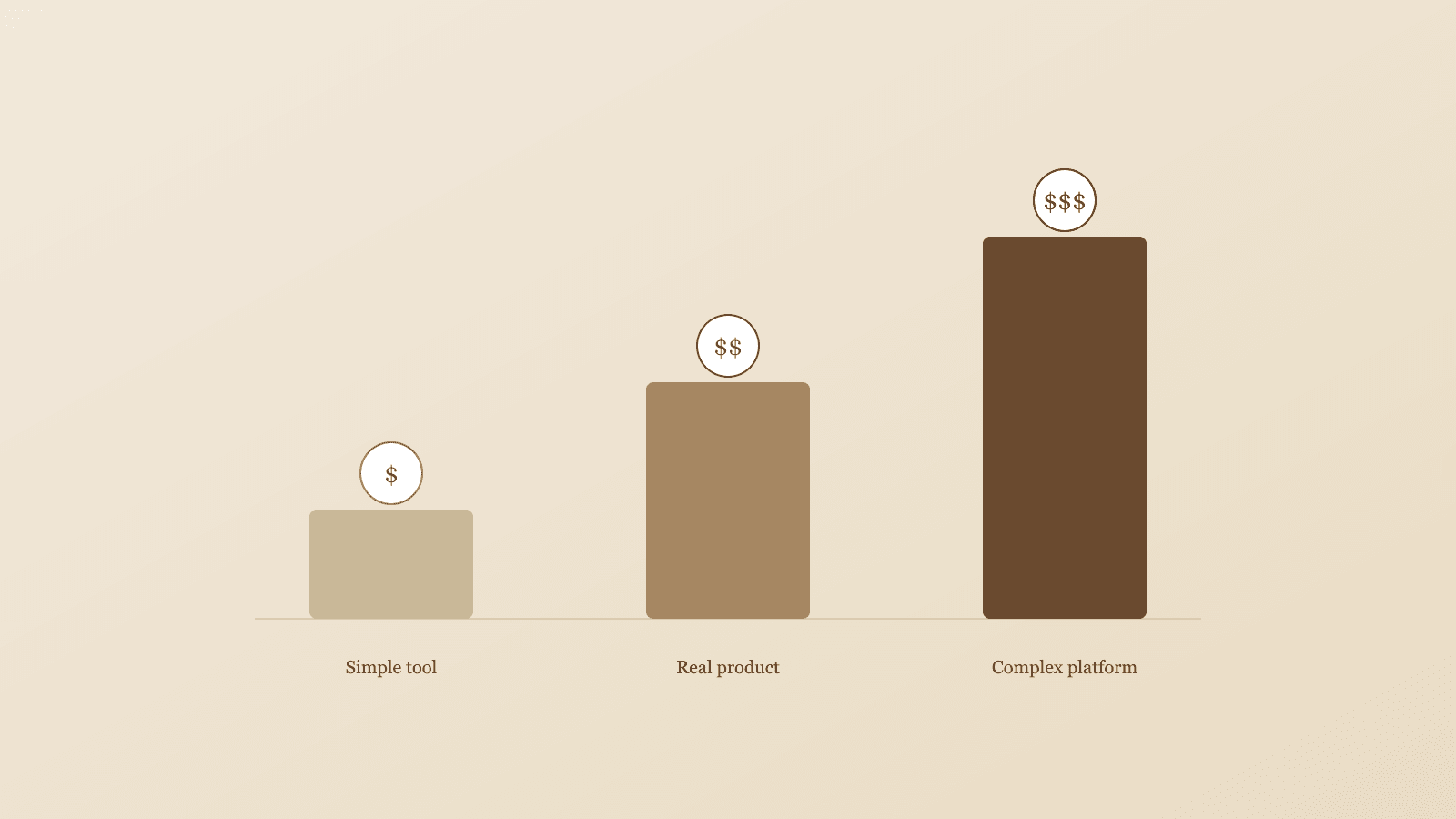
For a genuinely simple tool — a single-purpose internal app, a landing page with a form, a basic booking system — you're realistically looking at a few thousand dollars and a few weeks. For a real product with user accounts, a database, an admin panel, and integrations with other tools, the range widens fast: tens of thousands of dollars is normal, and complex platforms with multiple user roles, payments, or real-time features can run well past that.
The unsatisfying truth is that "how much does software cost" is close to asking "how much does a building cost." A shed and a small office building are both buildings. The number that actually matters is the one specific to your scope, not an industry average.
That said, three things move the price more than anything else.
How many things it has to do. A CRM that just tracks contacts is simpler than one that also manages a call center, integrates with WhatsApp, and generates reports by lead source. Every additional workflow is additional design, additional edge cases, and additional testing — not just additional code.
How much it has to integrate with. Standalone tools are cheap. Tools that need to talk to your existing payment processor, your accounting software, your WhatsApp Business account, and your inventory system cost more, because someone has to understand all of those systems, not just build a new one.
Whether it's built to last or built to ship. A prototype thrown together to validate an idea and a product built to run in production for years with real users are different projects, even if they look similar on a demo call. The second one costs more up front because it costs less later — proper error handling, documentation, and architecture that doesn't collapse the moment you need to change something.
If you want a number before you have real scope, the honest answer is: get a scoping conversation, not a quote. Anyone who gives you a firm number before understanding what you actually need is guessing — and guesses tend to be either too low (and grow later) or padded high to cover the guessing.
The way we handle it at Chnafi: a short conversation to understand what the software actually needs to do, a rough range based on similar work we've done, and then a real quote once the scope is clear enough that the number means something. No retainer required just to find out if a number is realistic.
Start a project